
Stop blaming spending. Most people think they have no money left because they spend too much. But that’s not true. Spending is just a symptom. The real problem happens way before anyone clicks “buy.” There are seven silent money mistakes that steal wealth—and most people never see them coming. These traps are why smart, hard-working people can make good money and still have nothing left at the end of the month. Understanding these seven mistakes and implementing the simple fixes can finally stop the leaks without cutting joy or tracking every penny. The answer isn’t spending less—it’s avoiding these invisible traps.
The Real Problem: It’s Not About Spending
Let’s be honest. Most people are looking in the wrong place. They think the problem is the $5 Starbucks coffee or buying one too many things on Amazon. But that’s not it. One bad purchase doesn’t ruin finances. The real enemy is silent. It hides in daily routines—the small things done every day without thinking. These small habits drain money slowly until the account is back at zero.
The facts are scary. Sixty-seven percent of people in this country live paycheck to paycheck. Almost seven out of ten people couldn’t cover a $1,000 emergency. And these aren’t lazy people. These are teachers, nurses, workers—people who work hard and do everything “right.” But they still can’t catch a break.
Maybe this feels familiar. Payday arrives on Friday. But two weeks later, the money is gone. Attempts to save get derailed when life happens. The car breaks. The kids need shoes. The account goes empty again. The thought creeps in: “If I just made more money, I’d be fine.” But the gap never closes. This isn’t about being bad with money. It’s a system problem. These are traps. And traps can be broken.
Mistake #1: The One Bucket Trap
The One Bucket Trap catches almost everyone. Here’s how it works. Payday arrives. The money lands in the checking account. And then everything lives there. Rent money. Grocery money. Fun money. Savings. It’s all in one big pile.
The balance looks high. The thought is: “Great, I have money.” So pizza gets ordered. A new shirt gets bought. Plans that weren’t even budgeted for get a yes. And then—poof. Like magic, it’s gone. The phone shows the account is empty already.
Here’s the truth: when all money is in one place, it’s impossible to see clearly. There’s no way to know which dollars are for bills and which dollars are for fun. Every month ends the same way—confused and broke.
What changes everything is giving money a purpose. Open a separate account for bills. Open one for spending. Open one for savings. When the “spending” account gets checked next time, there’s clarity on exactly how much can be used without touching money meant for other purposes. This simple separation eliminates the guessing game that drains accounts every month.
Mistake #2: Saving the Leftovers
This is one of the most expensive money mistakes people make. It goes like this: “I’ll pay my bills first. Then I’ll buy what I need. And I’ll save whatever is left at the end of the month.” But be honest—is there ever anything left? No. There’s never anything left.
Life always finds a way to take money. A surprise bill. A birthday gift. A flat tire. The plan to save gets pushed to next month. Again and again. The order has to flip. Save first. Spend second.
The second payday arrives, money moves to savings. Immediately. Even if it’s just $20. Before paying a single bill. Before buying coffee. This isn’t just about saving cash. It’s about building a muscle. If the waiting game continues for “leftovers,” wealth will never build. But when savings come first—off the top, automatically, non-negotiably—the foundation starts forming.
This shift seems small. But it’s the difference between people who build wealth and people who wonder where their money went. The money that gets saved first is the money that stays saved. Everything else disappears into the daily chaos of living.
Mistake #3: The Fake Safety Net (Credit as Emergency Fund)
This one feels safe but it’s a trap. The thought is: “I’ll just put this emergency on the card. I’ll pay it off later.” But here’s the problem: debt doesn’t go away. It grows. One car repair turns into months of payments. A vet bill turns into years of interest.
The card seems helpful. But actually, it’s digging a hole. Most people today are paying for emergencies that happened two years ago. That’s not safety. That’s chains. And to be clear—this isn’t about credit cards being bad. It’s about using them for the wrong job.
Credit cards aren’t a safety net. A real safety net is built with cash. Start small. Even $100 set aside protects better than $100 on a card. When personal money gets used, the problem ends today. When the bank’s money gets used, payments continue long after the emergency is gone.
The path forward is simple: build a small cash buffer. Even $250 changes everything. It’s the difference between an emergency becoming a manageable inconvenience versus spiraling into months of debt payments with interest eating away at future paychecks.
Mistake #4: The Dopamine Trap (Emotional Spending)
This is the most dangerous money mistake. Picture this: It’s 9:00 PM. The day at work was terrible. Exhaustion sets in. The phone opens. A pair of shoes appears. Or a gadget. The “buy” button gets clicked. For exactly five minutes, there’s a rush.
That’s not happiness. That’s dopamine—a chemical in the brain. The purchase wasn’t about the product. It was about renting relief from pain. But here’s the truth: when the box arrives two days later, the feeling is dead. The rush is gone. But the money is gone too. The stress isn’t fixed. Relief was just borrowed for a moment.
Here’s the fix: the 24-Hour Freeze. If the desire for something that isn’t food or medicine hits, put it in the cart. But don’t click buy. Force a wait until tomorrow. Ask: “Am I buying this thing, or am I trying to fix a bad mood?”
By the next morning, the dopamine will fade. And nine times out of ten, the item gets deleted and the cash stays saved. This simple rule breaks the chemical cycle that drains bank accounts during moments of emotional weakness. It’s not about never buying anything. It’s about buying from a place of choice, not emotion.
Mistake #5: Driving Blindfolded (Avoiding Bank Account)
Imagine getting on the highway, hitting 60 miles per hour, and then closing your eyes. That would never happen. It’s crazy. But with money, it happens every day. The banking app stays closed because of fear about what it might show. Instead of looking, “mental math” takes over.
Studies show 65 percent of people have no clue where their money actually went last month. Most people are just guessing. But the brain lies. It forgets the Netflix charge. It forgets the coffee bought on Tuesday. And suddenly—boom. Overdraft fee. Declined card. Embarrassment.
No one can drive a car by guessing. No one can run a life by guessing. The blindfold has to come off. Start a weekly money check. Pick one day—Sunday works well. Open the app for just five minutes. Don’t judge. Just look at the data. What came in? What went out? What’s actually left?
What can’t be seen can’t be fixed. But the moment the numbers become visible, the anxiety stops and control begins. This weekly habit transforms the relationship with money from avoidance and fear to awareness and power.

Mistake #6: The “More Money” Myth (Lifestyle Creep)
This mindset keeps people stuck forever. The thought is: “I’ll fix my money when I get a raise. I’ll start saving when I earn more.” It sounds smart. But it’s wrong. If a bucket has a hole in it, pouring more water in doesn’t fix the hole. The water just leaks out faster.
There are people making $200,000 a year who are still broke. Why? Because of lifestyle creep. As soon as the raise arrives, a newer car gets bought. The move happens to a bigger apartment. Nicer restaurants become normal. Income goes up, but spending jumps right along with it. The race runs faster, but the position stays the same.
Stop waiting for the big check. Start now with the money available today. If $50 can be managed well, $5,000 can be managed well. But if $50 can’t be managed, more money won’t save anything. It will just make the problems bigger. Avoiding these common money mistakes starts with the current income level, not some future imaginary paycheck.
Mistake #7: The Zero Reset (Spending Down to Nothing)
This is the reason exhaustion sets in. Here’s the cycle most people live in. Hard work happens for 30 days. Payday arrives. Bills get paid. Then the account gets checked. There’s $50 left. So what happens? The thought is: “I have extra money!” And it gets spent.
By the last day of the month, the account is back to exactly zero. Think about that. It’s like running a race but getting dragged back to the starting line at the end of every month. Hard work happens. Sweat happens. But there’s no forward movement. Just spinning in a circle.
The wheel has to break. Stop spending down to zero. If $20 remains on the last day of the month, don’t touch it. Leave it there. That $20 isn’t “spending money.” It’s a brick. Next month, another brick gets added on top of it. Suddenly, the starting point isn’t the bottom anymore. It’s standing on a foundation.
This simple habit—letting money roll over instead of resetting to zero—is how small balances become big balances. It’s how foundations get built. One month becomes three months. Three months becomes six. And six months becomes the security that changes everything.
The Solution: Break Free from Money Mistakes
These seven silent traps have been revealed. If there was a sting while reading—if the thought was “that’s me”—that’s actually a good thing. It means awareness is happening now. And with awareness comes the power to fix it. Perfection isn’t required. A system is required.
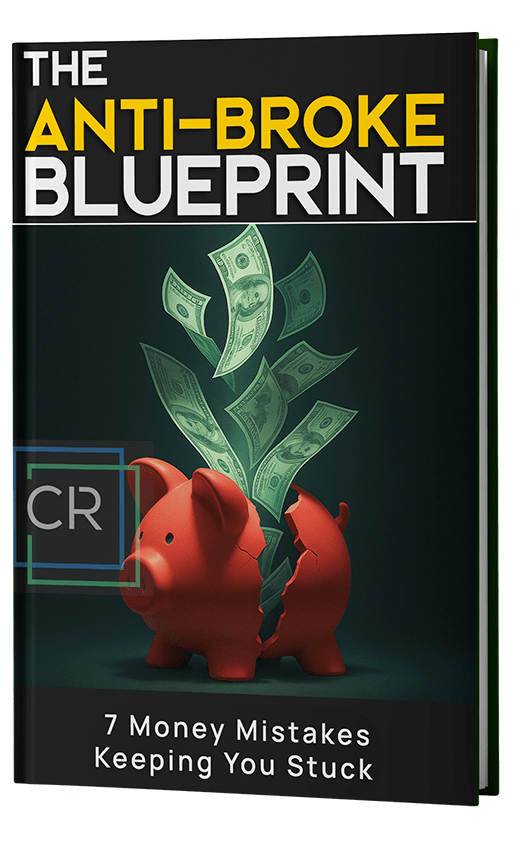
The Anti-Broke Blueprint is a complete guide that takes everything covered here and turns it into an action map. It has a checklist to spot leaks in five minutes. It shows the math on exactly how much car payments cost over time. And it provides a simple plan to build the first $1,000 safety net.
This isn’t a boring textbook. It’s a to-do list that can be finished this weekend. And it’s completely free. Download it now using the link below. Stop guessing with money and start controlling it. Let’s refine your money, grow your capital, and build real wealth—one intentional step at a time.
For more tips follow us on our YouTube Channel