
Almost 70% of Americans are living paycheck to paycheck. Most people hear that and think it’s about low pay. It’s not. Actually, one out of four people earning over $250,000 a year is stuck in that same cycle. That tells us something important: the issue isn’t how much money comes in—it’s what happens once it does. When income goes up, life usually expands right with it. Things get more expensive, and the extra money gets used before it ever turns into breathing room. So even with a bigger paycheck, the pressure doesn’t go away. Here’s why this keeps happening.
The Confusion: Why This Keeps Happening
What’s behind this pattern is easier to miss than people think. It’s not one bad decision or one big mistake. It’s how money choices slowly turn into fixed expenses. A higher rent becomes normal. A bigger car payment becomes standard. Monthly bills quietly grow until everything feels expected.
Nothing feels serious when it happens. Each change makes sense at the time, so there’s never a moment where people stop and question it. Over time, this creates a setup where most of the paycheck is gone before it gets touched. That’s why people can change jobs, move to different cities, and still feel the same financial pressure living paycheck to paycheck.
Once this setup becomes clear, the numbers start to make sense. Here are the seven reasons this keeps happening—and why so many people stay broke despite earning good money.
Reason #1: Small Monthly Bills Add Up Fast
This is the first thing that quietly eats people alive. The average American now has more than 12 active subscriptions, spending about $300 every single month on them. Streaming apps, software, cloud storage, fitness apps, delivery memberships, music, news, and more. Most people couldn’t name all of them without opening their bank app.
The tricky part is that none of these feel expensive. Most start at $2.99, $5.99, $9.99, maybe $15 or $20. Amounts that feel easy to say yes to and easy to forget about. The problem is that they don’t go away. Once a bill becomes monthly, it stops feeling like a decision. It just becomes part of life. Auto-pay turns it into background noise.
Over time, those small charges stack into hundreds of dollars every month. As income goes up, this usually gets worse. Higher earners don’t cancel these bills—they add more. Better apps. Extra services. Upgrades for convenience. The prices stay small, but the list keeps growing.
That’s why raises disappear so fast. The extra money doesn’t create breathing room. It gets used up by things that feel useful and harmless. Nothing feels reckless, but the total keeps climbing. Eventually, a big part of the paycheck is gone before it ever feels usable.

Reason #2: Location Cost Eats Your Paycheck
This reason is about how far a paycheck actually stretches. Where someone lives sets the cost of basics: housing, taxes, childcare, insurance, utilities, and daily expenses all move together. When those costs are high, a salary that looks big on paper can feel surprisingly small in real life.
Take someone earning $100,000 a year in New York City. On paper, that sounds like a great income. In reality, high rent or a mortgage takes a big chunk right away. State and city taxes pull more off the top. Childcare, insurance, transportation, and basic services cost more. By the time bills are paid, that six-figure salary doesn’t go nearly as far as expected.
Now take someone earning the same $100,000 in Houston. Housing costs are much lower. Texas has no state income tax. Everyday expenses leave more room. That same paycheck feels very different month to month. Same income. Different reality.
That’s why raises don’t bring relief in high-cost places. They mostly keep pace with rent and taxes instead of creating breathing room. What makes this hard is that location rarely feels like a simple choice. Jobs, schools, family, and opportunity pull people into expensive areas. So people adjust and build a life that requires their full paycheck just to get by.
Reason #3: Paying to Save Time (Convenience Costs)
This reason isn’t about monthly bills. It’s about what gets paid when life feels busy. Modern life is built around speed. Food shows up fast. Groceries arrive at the door. Rides replace driving. Same-day shipping replaces waiting. Most of the time, the goal isn’t to spend more money—it’s to save time.
That’s where the cost sneaks in. On average, Americans spend around $120 a month on food delivery alone, adding up to about $1,500 a year. And that’s just delivery, not everything else. What most people don’t realize is that convenience often costs more in two ways: fees and tips, plus higher prices for the same items.
A meal that costs $12 in the restaurant might cost $15 in the app before fees even show up. That difference doesn’t feel obvious in the moment. It only becomes visible when looking back at the month. As schedules get tighter, convenience stops feeling optional. Cooking gets replaced by ordering. Waiting gets replaced by paying.
When people earn more, they don’t buy less convenience—they buy more of it. The spending feels justified because it saves time. The problem is that time savings don’t show up on bank statements. The charges do. So even without new subscriptions or bigger bills, money keeps leaking out in small, frequent amounts while living paycheck to paycheck continues.

Reason #4: The Pressure to Keep Up
This reason isn’t about liking nice things. It’s about how easy it is to feel behind. Today, comparison is constant. Social media shows how other people live, travel, eat, dress, and spend. Looking for it isn’t necessary—it’s always there.
The problem isn’t envy. It’s normalization. When everyone around seems to be upgrading, spending more starts to feel normal. Better apartments. Newer cars. More trips. Nicer everything. Over time, “nice to have” quietly turns into “expected.” Most people aren’t trying to show off. They’re trying to keep up with what feels like the baseline.
This gets stronger as income rises. When people earn more, their circles often change. Coworkers, friends, and social plans start to look different, and expectations rise with them. The spending around increases, and what once felt like plenty starts to feel average. So money goes toward looking stable and successful, even when it means less room behind the scenes.
What makes this dangerous is that it doesn’t feel reckless. It feels necessary. The cost doesn’t show up in one place. It spreads across housing, cars, trips, clothes, and experiences that are hard to opt out of socially.
Reason #5: Debt Quietly Fills the Gap
This is what ties the first four reasons together. When money feels tight but life keeps moving, something has to bridge the gap. Most of the time, that something is debt. Not reckless debt. Normal debt. Credit cards cover uneven months. Buy now, pay later makes purchases feel smaller. Auto loans stretch payments just enough to feel manageable.
None of it feels urgent or dangerous. It feels helpful. That’s the trap. Debt doesn’t remove pressure—it pushes it forward. Instead of money adjusting to life, life keeps moving and debt absorbs the difference. Bills still get paid. Plans still happen. The stress just gets delayed.
That’s why so many high earners carry balances. The median household debt is around $19,000, not counting mortgages—made up of credit cards, auto loans, student loans, and similar debt. As income rises, access to credit gets easier. Limits rise. Offers improve. Monthly payments look affordable, and spending stays invisible because cash never leaves all at once.
The cost, however, doesn’t disappear. Interest turns past choices into future obligations. Payments lock in income before it’s earned, and flexibility fades quietly. Over time, more of each paycheck is already allocated. At a certain point, debt stops being a bridge and starts becoming part of the structure.
Reason #6: The Costs You Can’t Opt Out Of
Some expenses grow no matter how careful someone is. This isn’t about lifestyle choices or bad habits. It’s about the big costs that keep rising whether life gets upgraded or not. Housing is the biggest one. Rent and home prices have climbed faster than pay in many areas. Even modest places cost more than they used to.
Healthcare is another. Insurance premiums rise. Deductibles get higher. One visit can wipe out a month of savings, even for people with “good” coverage. Childcare follows the same pattern. Costs increase year after year, and opting out isn’t an option for working families. Education adds more pressure. Tuition rises. Fees pile on.
These costs don’t feel optional because they aren’t. Upgrades can be delayed. Convenience can be cut. Vacations can be skipped. But housing, healthcare, and childcare can’t. That’s why this hits so many people at once. Even disciplined spenders feel squeezed when the largest bills rise faster than income.
Raises don’t create relief because they get absorbed immediately by costs no one can avoid. This is where frustration builds. People feel like they’re doing everything right, yet the math never seems to work—not because of mismanaging money, but because basic costs keep rising while living paycheck to paycheck persists.
Reason #7: How Much You Actually Keep (Take-Home Reality)
This is the part most people never fully see. When someone gets a raise, thinking happens in terms of the full number. But that’s not what hits the bank account. A big chunk disappears before the money ever feels real.
Taxes come out first: federal, state, payroll, sometimes local. By the time it’s done, a raise doesn’t look nearly as big as it did on paper. Then benefits take their share: health insurance, retirement contributions, other deductions that feel responsible but still reduce take-home pay. What’s left is the number life has to work with.
This is where the gap shows up. As income rises, the percentage taken often rises too. Each extra dollar keeps less of its value. A raise might look like progress, but only a portion actually reaches the checking account. That’s why people feel confused. They earn more, but the difference doesn’t feel meaningful.
The money that could have created space never fully arrives. It gets split up before it can do any work. So when costs go up, the money that should create breathing room never gets the chance. This is why high earners can still feel tight—not because they don’t make enough, but because they’re judging progress by income instead of what actually stays with them.
The Pattern: Structure, Not Behavior
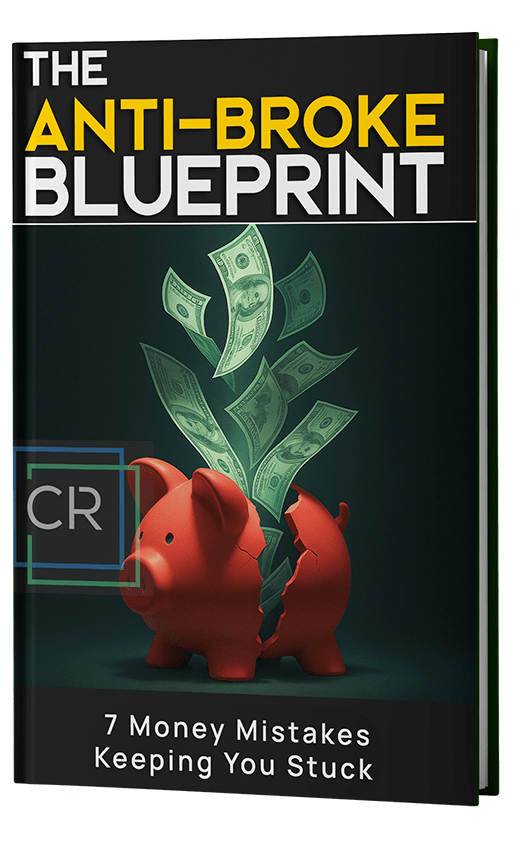
Once you zoom out, the pattern becomes clear. This isn’t one problem. It’s multiple small money drains happening at the same time. Costs rise quietly. Convenience charges a premium. Debt fills gaps. Social pressure resets what feels normal. Taxes and deductions shrink what actually gets kept.
None of these break people on their own. Together, they do. That’s why this shows up across incomes. The job can change. The salary can change. But the structure stays the same. Most people think they’re bad with money. They’re not. They were taught to chase income in a world that doesn’t protect it.
This isn’t about discipline or willpower. It’s about how things are set up. If income looks good but money still feels tight, the problem isn’t effort. It’s that no one showed how to build a buffer between what gets earned and what life takes. More hustle isn’t needed. A better way to keep money from leaking before it ever gets to do its job is what’s needed.
That’s exactly what the Anti-Broke Blueprint is about. It’s a free PDF designed to help identify where money leaks, understand which traps cost the most, and make simple changes that allow keeping more of what gets earned. Download the Anti-Broke Blueprint . Let’s refine your money, grow your capital, and build real wealth—one intentional step at a time.
For more tips follow us on our YouTube Channel