Opening a brokerage account with Vanguard is a great step toward taking control of your financial future. Whether you’re looking to start investing in ETFs, stocks, or mutual funds, Vanguard offers a reliable, low-cost platform that’s ideal for both beginners and experienced investors.
This comprehensive step-by-step guide shows you exactly how to open a Vanguard brokerage account, fund it, and start investing, while also covering key tips and important notes to help you avoid unnecessary fees.
Step 1: Start at Vanguard’s Website
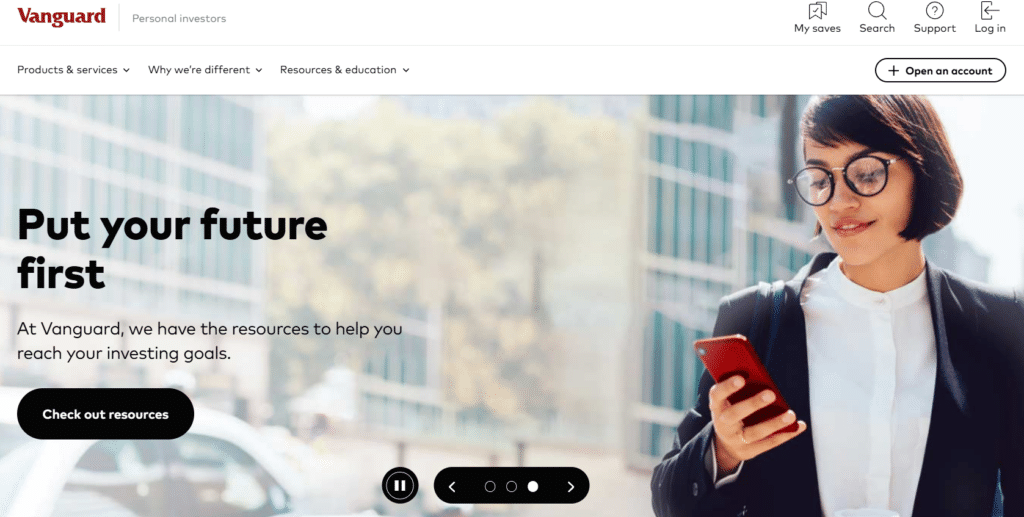
To begin, head over to vanguard.com. If you go to the main website:
- Click on “Personal Investors” to access the correct section, as Vanguard offers different portals depending on your profile.
Once you’re in the right place, you’ll see the option to “Open an account” — click it to get started.
Step 2: Choose the Type of Account to Open
You’ll be presented with five options for opening an account. For this guide, we’re selecting the first one:
- Open a new account with money from my bank
Click “Continue” to move forward.
Step 3: Decide How to Manage Your Account
Next, you’ll be asked how you’d like to manage your investments:
- “Let Vanguard help me” — for those who want professional guidance.
- “I’ll do it myself” — for self-directed investors.
In this walkthrough, we choose “Invest on my own” to maintain full control over investment decisions.
Step 4: Review Requirements
Before proceeding, Vanguard provides an overview of what you’ll need:
- A U.S. permanent address
- Social Security Number
- Employer’s address (if applicable)
Also, note that Vanguard charges a $25 annual service fee unless you opt for paperless (e-delivery) for all account documents. To avoid this fee, make sure to select electronic document delivery in your account settings later.
Step 5: Select the Account Type
Now, choose the type of account you wish to open. You’ll see:
- Retirement account
- General investing or emergency savings (this is the one we’ll choose)
- Education account for a child
Select “General investing or emergency savings” and click Continue.
Step 6: Define the Account Owner
You’ll be asked who the account is for:
- Myself
- Me and another adult
Choose what applies to your situation. For a standard individual account, select “Myself”.
Next, select between:
- Individual Brokerage Account (the correct option for investing in stocks and ETFs)
- Cash Plus Account
Choose Individual Brokerage Account and click Continue.
Step 7: Enter Personal Details
Fill in your:
- Full name
- Home address
- Phone number
After completing these fields, review all your details on the popup card and click Continue.
Step 8: Create Login Credentials
Create your:
- Username
- Password
- Security questions
Read and accept Vanguard’s agreements, and proceed to finalize your online access.
Once complete, log in to your new Vanguard account.
Step 9: Link and Fund Your Bank Account
You now need to connect your bank to fund your account.
Click “Connect my bank”, and choose one of the following:
- Connect instantly using your bank login
- Manually enter bank details
In our example, we use Capital One. Once connected, select the bank account you’d like to use and proceed.
Enter the amount to fund your brokerage account — Vanguard’s minimum deposit is just $1. In the demo example, $30 was added.
Step 10: Choose Your Settlement Fund
The settlement fund is where uninvested cash will be held. You’ll be given two options:
- Vanguard Cash Deposit
- Low risk
- Earns an APY (currently 2.75%)
- Vanguard Federal Money Market Fund
- Slightly more return potential
- Invests in short-term U.S. government securities
- Current yield around 4.28%
Choose based on your risk preference. If you’re unsure, the Money Market Fund is often a popular choice for keeping cash slightly more productive.
Step 11: Enter Financial Profile
Vanguard will now ask for:
- Employment status
- Income range
- Net worth
- Source of funds
Fill in the information that applies to you and click Continue.
Step 12: Define Your Investment Purpose
You’ll be prompted to state the purpose of your account:
- Growth
- Income
- Preservation of capital
- Other
Choose the one that best reflects your goal — in our case, growth.
Then review all your information once more, read through the terms, and click “Submit the application”.
Congratulations — your Vanguard brokerage account is now open!
Make sure to save your account number — you won’t be able to revisit this page later.
Step 13: Wait for the Funds to Arrive
Your money will typically arrive within 1–3 business days. However, Vanguard has a 7-day hold on non-Vanguard investments (e.g., stocks or ETFs) unless you’re buying Vanguard mutual funds or ETFs. This is important to remember if you’re eager to start trading right away.
Step 14: Avoid the Annual Fee
Before investing, make sure to:
- Go to your profile settings
- Select “E-delivery” for all documents
This simple step will waive the $25 annual service fee.
Step 15: Buying ETFs on Vanguard
Once your funds have cleared, it’s time to make your first investment.
To buy an ETF:
- Go to your portfolio and select “Trade ETFs”
- Accept all terms (yes, there are several pages of agreements)
- Search for your ETF — in this example, we use Vanguard’s VOO ETF
💡 VOO tracks the S&P 500 Index and offers broad exposure to large U.S. companies. It’s one of Vanguard’s most popular ETFs.
Even if you don’t have the full price of one share (e.g., $533.64), Vanguard allows fractional investing — meaning you can buy a portion of a share. However, fractional shares are only available for ETFs and mutual funds, not individual stocks.
Choose to “Buy in dollars”, enter the amount (e.g., $20), and submit the order.
Step 16: Viewing Holdings and Selling
Once the order is processed, visit your Holdings tab to:
- View your current assets
- Monitor performance
- See fractional shares
To sell, click Transact → Sell, and Vanguard will redirect you to the trading dashboard.
⚠️ Important: Selling all fractional shares might take up to one extra business day to fully update. Also, do not attempt to sell the same security twice in one day — it may cause processing issues.
How to Open a Vanguard Brokerage Account – Final Thoughts
Vanguard is a user-friendly, cost-effective platform ideal for long-term investors. Their commitment to low fees and broad selection of ETFs and mutual funds makes them a top choice.
Here are a few final tips:
- Always use e-delivery to avoid fees
- Use fractional investing to get started with small amounts
- Check the settlement fund to maximize idle cash returns
- Stay informed through your Vanguard messages and documents tab
With your account now active, you’re ready to begin your investing journey — congratulations!