Choosing between the different Chase checking accounts can be confusing at first glance. While they may seem similar, each account is designed for a different type of customer. Selecting the wrong one could leave you paying unnecessary monthly fees that add up to hundreds of dollars each year.
In this guide, we’ll rank the three main Chase checking accounts, explain who each one is best suited for, show you how to avoid monthly fees, and help you decide which account offers the best value.
Chase Checking Accounts Ranked
Here’s how the three main Chase checking accounts rank for most consumers:
- Chase Total Checking – Best Overall
- Chase Secure Banking – Best for Students and Overdraft Protection
- Chase Premier Plus Checking – Best for a Small Group of Customers
Let’s take a closer look at each one.
1. Chase Total Checking: Best Overall
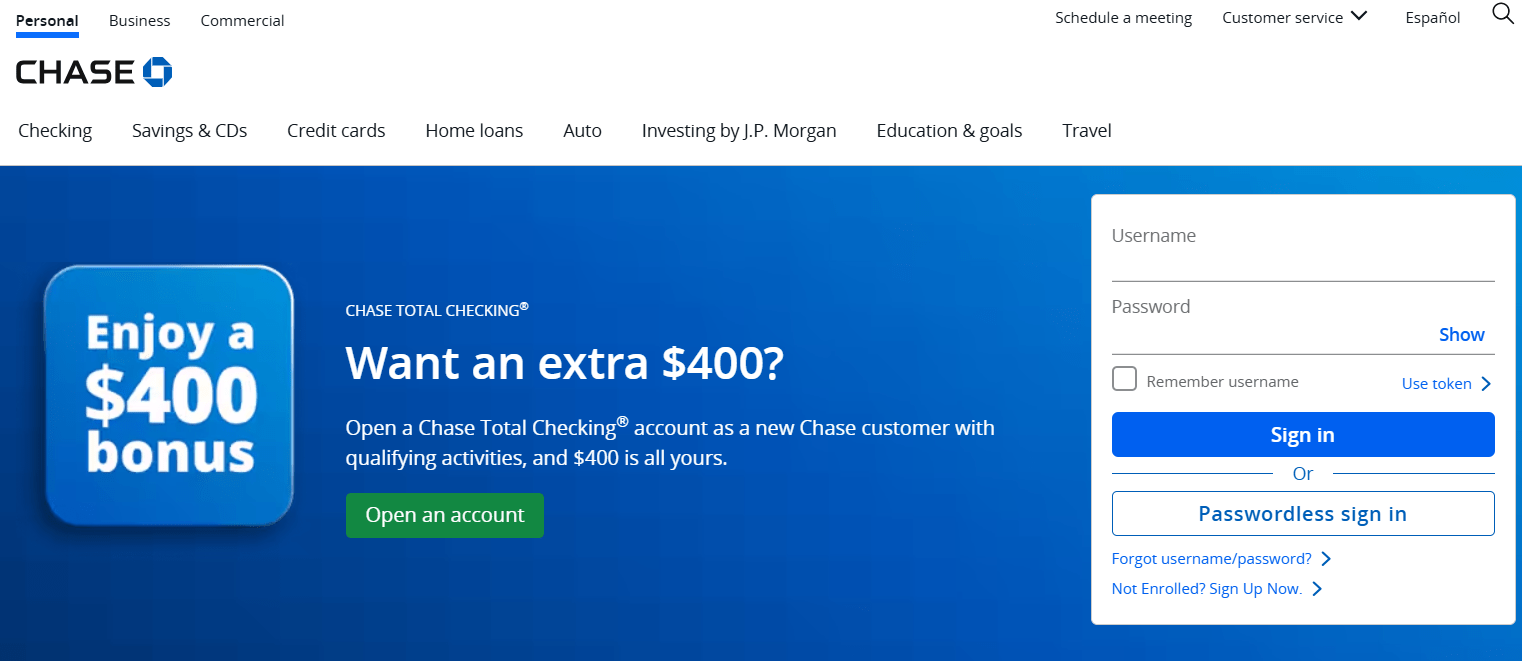
For most people, Chase Total Checking is the strongest option. It’s the standard checking account that offers the features most customers actually need without requiring a large balance.
Features include:
- No minimum opening deposit
- Paper checks included
- Outgoing wire transfers
- Chase Overdraft Assist
- Access to Chase’s nationwide branch and ATM network
Like many traditional checking accounts, it does not earn interest, but that’s fairly common among major banks.
Monthly Fee
The account charges a $15 monthly maintenance fee, but it’s easy to avoid if you meet one of these requirements:
- Receive at least $500 in qualifying electronic deposits each month.
- Maintain a daily balance of at least $1,500.
- Keep a combined average daily balance of $5,000 across linked Chase deposit or investment accounts.
- Link the account to another qualifying Chase checking account.
For most people, setting up direct deposit of at least $500 per month is the easiest solution. Once that’s in place, the monthly fee is automatically waived.
Who Should Choose It?
Chase Total Checking is ideal if you:
- Receive regular direct deposits
- Want paper checks
- Occasionally send wire transfers
- Prefer a traditional checking account with full banking features
For the average customer, this is the best choice among all Chase checking accounts.
2. Chase Secure Banking: Best for Students and Overdraft Protection
Chase Secure Banking is designed for customers who want to eliminate overdraft fees or who are just getting started with banking.
Unlike traditional checking accounts, this account generally won’t allow you to spend more money than you have. Instead of charging expensive overdraft fees, transactions that exceed your available balance are typically declined.
Other features include:
- No minimum opening deposit
- Early direct deposit, allowing paychecks to arrive up to two business days sooner
- No fees for money orders
- No fees for cashier’s checks
- Free Zelle transfers
However, there are some trade-offs:
- No paper checks
- No outgoing wire transfers
- No interest earned
Monthly Fee
The monthly fee is $4.95, but it can be waived if you:
- Are between ages 17 and 24, or
- Receive at least $250 in qualifying electronic deposits each month.
Who Should Choose It?
This account is an excellent option for:
- College students
- Young adults
- First-time bank customers
- Anyone who has struggled with overdraft fees in the past
If you rarely overdraw your account and want more banking features, Chase Total Checking is still the stronger option.

3. Chase Premier Plus Checking: Best for a Limited Audience
Chase Premier Plus Checking is the premium option among the Chase checking accounts, but it won’t make financial sense for most customers.
It includes:
- Paper checks
- Outgoing wire transfers
- No Chase ATM fees worldwide
- No foreign exchange adjustment fees
- No fees for money orders or cashier’s checks
- Interest on your balance
Unfortunately, the interest rate is extremely low, making it difficult to justify keeping a large balance in the account.
Monthly Fee
The account charges $25 per month unless you qualify for one of these fee waivers:
- Maintain a $15,000 average daily balance in eligible Chase accounts.
- Link another qualifying Chase checking account.
- Have a qualifying Chase mortgage with automatic payments.
- Be an active-duty service member or military veteran who qualifies.
Unlike Chase Total Checking, direct deposit alone does not waive the monthly fee.
Why It Isn’t the Best Value
Keeping $15,000 in a checking account earning almost no interest comes with a significant opportunity cost.
That same money could potentially earn hundreds of dollars annually in a competitive high-yield savings account instead of sitting in a low-interest checking account simply to avoid a monthly fee.
Who Should Choose It?
Premier Plus Checking only makes sense if you:
- Qualify for the military fee waiver
- Already have a qualifying Chase mortgage
- Frequently travel internationally and value the ATM benefits
For everyone else, the added cost outweighs the benefits.
Chase First Banking and Chase High School Checking
Families should also know about Chase’s youth banking options.
Chase First Banking
Designed for children ages 6 to 17, this account allows parents to manage spending while giving kids their own debit card.
Features include:
- No monthly fee
- No minimum balance requirement
- Full parental controls through the Chase mobile app
Parents must already have a Chase checking account to open it.
Chase High School Checking
Available for teens ages 13 to 17, this account includes:
- No monthly fee
- Debit card
- Direct deposit capability
- Zelle access
Parents are listed as co-owners, and the account must be linked to a parent’s Chase checking account.
Once the account holder turns 19, it automatically converts into Chase Total Checking, meaning the standard monthly fee applies unless the new account holder qualifies for a fee waiver.
How to Avoid Chase Checking Account Fees
No matter which account you choose, understanding the fee requirements is essential.
Here are the easiest ways to avoid paying monthly maintenance fees:
- Set up qualifying direct deposit whenever possible.
- Keep the required minimum balance if direct deposit isn’t available.
- Take advantage of age-based fee waivers for eligible students and young adults.
- Use military or mortgage-related fee waivers if you qualify.
Many customers pay monthly fees simply because they don’t realize they qualify for a waiver.
Which Chase Checking Account Is Best?
Among all the Chase checking accounts, Chase Total Checking is the clear winner for most people.
It offers the best balance of features, flexibility, and accessibility while allowing most customers to eliminate the monthly fee with a simple direct deposit.
Chase Secure Banking is an excellent choice for students, younger customers, or anyone who wants built-in overdraft protection.
Chase Premier Plus Checking, despite its premium branding, is only worthwhile for a relatively small group of customers who qualify for its fee waivers or regularly use its travel-related perks.
Final Verdict
If you are opening a new account today, Chase Total Checking is the strongest recommendation for the average customer. It includes the features most people need, and avoiding the monthly fee is straightforward with qualifying direct deposits.
Before opening any of the Chase checking accounts, take a few minutes to review the fee waiver requirements. Doing so can save you anywhere from $60 to $300 per year while ensuring you choose the account that best fits your financial habits.