Knowing how to use your paycheck to build wealth matters more than income alone. Many people earn well yet still feel stuck because money is never given direction when it arrives. Without a clear routine, paychecks disappear into bills and spending before progress can happen. This article breaks down a simple five-step paycheck routine designed to turn income into stability, savings, and long-term wealth. The system works automatically, requires minimal time, and removes the need for constant budgeting or decision-making—making it realistic for real life.
Why Paychecks Keep Disappearing (And Why It’s Not a Personal Failure)
Most paychecks don’t disappear slowly over the course of a month.
They disappear in the first few days.
A deposit hits the account and there’s a moment of relief—breathing feels easier and the pressure drops. But that relief doesn’t last. Bills follow, groceries get bought, and a small reward feels justified simply for making it through another pay period.
Then the balance drops faster than expected. Spending tightens. Choices feel smaller. And suddenly the next payday feels far away again.
This cycle doesn’t only happen at low incomes. People earning $50,000, $120,000, even $200,000 experience the same stress. The issue usually isn’t income—it’s what happens after income arrives.
Most months start with good intentions: a new spreadsheet, a budgeting app, a promise to “do better.” Then life takes over. Work piles up, responsibilities compete, and tracking every dollar starts to feel like homework. When the system requires constant attention, it eventually breaks.
Over time, checking the bank balance becomes stressful, so it gets avoided. Financial goals feel less worth setting because disappointment hurts more than trying.
But this isn’t a personal flaw.
When paychecks keep disappearing, it’s not a failure of discipline.
It’s a timing problem.

The Invisible Trap: Why Higher Income Doesn’t Fix Cash Flow
One of the most common beliefs in personal finance is:
“If I just made more money, this would go away.”
In reality, higher income often delays the problem—it doesn’t solve it.
When income increases without structure, spending expands to fill the space. More comfort. More convenience. More commitments. The stress changes shape, but it doesn’t disappear.
This is why people at every income level can feel stuck. The issue isn’t the size of the paycheck. It’s the system—or lack of one—that handles it.
A paycheck without structure behaves like water poured onto a flat surface. It spreads instantly and disappears.
A paycheck with structure flows into channels. It goes where it’s directed, every time.
The difference isn’t effort.
It’s design.
The Missing System Most People Were Never Taught
Most financial advice focuses on what to do with money, but rarely explains when those actions should happen.
Pay bills.
Save more.
Reduce debt.
Spend less.
Each idea makes sense on its own. But without a clear sequence, they compete with each other in real life.
When decisions are spread across the month, money becomes reactive. Bills arrive on different days. Spending happens in between. Saving gets pushed to the end, where it depends on whatever might be left. Even strong intentions struggle to survive in that environment.
Traditional budgeting assumes constant attention and perfect follow-through. It asks people to make dozens of small decisions week after week—even during busy or stressful periods. Over time, decision fatigue takes over and the system quietly collapses.
A paycheck routine works in the opposite direction.
Instead of managing money every day, decisions are concentrated into one moment—the moment income arrives. That single shift removes much of the friction that causes plans to fail.
Savings are handled first.
Essentials are secured early.
Debt stays visible.
Spending happens within clear boundaries.
The routine doesn’t need to be complex. In fact, simplicity is critical. A system that requires frequent adjustment eventually gets ignored. A system that runs the same way every payday becomes automatic.
That is the purpose of the five-step paycheck routine.

The 5-Step Paycheck Routine
Step 1: Pay Yourself First
The first action taken after payday determines how the rest of the paycheck behaves.
Paying yourself first means moving money into savings the moment income arrives. Not later in the week. Not after expenses. Immediately.
Most people do this in reverse. Bills get paid as they come in. Spending fills the gaps. Saving becomes whatever might be left—if anything is left at all.
This step works because it changes the order, not because it requires a large amount.
The amount matters far less than the timing. Starting with $10, $20, or $25 is enough to establish the habit. Once money is removed from the checking account immediately, the rest of the paycheck naturally adjusts around it.
This step does more than build savings. It quietly sets the ceiling for spending. When money is removed at the start, everything else contracts without tracking, effort, or guilt.
Automation is key. A transfer scheduled on payday removes decision-making entirely. Distance protects the money and reduces temptation.
Once saving is handled first, the rest of the paycheck becomes easier to manage.

Step 2: Cover Your Essentials First
After savings, the next priority is stability.
Essentials include the expenses that keep life functioning: housing, utilities, groceries, insurance, and transportation. When these aren’t handled intentionally, money starts reacting to reminders, due dates, and late notices instead of following a plan.
Many people pay bills sporadically—some immediately, others when they remember, and some only after a notice appears. That pattern creates constant low-level stress and the feeling that money is always playing defense.
Covering essentials early changes that dynamic.
As soon as income arrives, essential expenses are identified and accounted for. Whether this is done through autopay, a checklist, or a separate account, the goal is the same: remove uncertainty.
When the basics are secured early, the rest of the paycheck feels lighter.
If income doesn’t fully cover all needs in a given pay period, prioritization matters. Housing, utilities, and food come first. Everything else becomes secondary. Clarity prevents money from being spread thin across competing obligations.
Step 3: Address Debt and Credit Intentionally
After savings and essentials are handled, debt comes next.
Debt is often avoided not because it’s complicated, but because it’s uncomfortable. Balances change. Statements arrive. Ignoring it feels easier in the short term.
But avoidance gives debt power.
Within a paycheck routine, debt is reviewed on payday. Balances are checked. Payments are made deliberately. When possible, balances are paid in full. When that isn’t realistic, at least the minimum is covered, with any extra applied intentionally.
This step isn’t about perfection.
It’s about presence.
Progress doesn’t require eliminating all debt at once. It requires staying aware and moving forward consistently. Even small additional payments reduce interest and reinforce control.
Over time, debt shifts from something that creates anxiety into something that’s actively managed.
Step 4: Spend With Boundaries
After savings, essentials, and debt are handled, the remaining money is available for spending.
Without boundaries, spending expands quickly. Payday creates a sense of freedom, and it becomes easy to say yes to dinners, outings, or impulse purchases. Nothing feels wrong in the moment, but later in the pay period the balance tells a different story.
At the same time, systems that try to eliminate all enjoyment tend to fail. Pressure eventually breaks the plan.
Spending with boundaries solves both problems.
Instead of tracking every purchase, a clear limit is set for discretionary spending. This might be a separate checking account, a designated debit card, or a defined portion of the paycheck reserved for non-essentials.
The rule is simple: when that money is gone, spending stops.
This removes guilt from spending decisions. Enjoyment is allowed because priorities have already been handled.
Step 5: Review and Refine
The final step is what keeps the routine working long-term.
Even with a solid system, real life still happens. Some months go smoothly. Others don’t. An expense shows up unexpectedly. That doesn’t mean the routine failed.
Once every week or two, accounts are checked briefly—not to judge, but to notice patterns.
Three questions guide the review:
- What worked this pay period?
- What created friction or stress?
- What small change could improve the next one?
Small refinements compound. A bill gets moved to autopay. A spending boundary gets adjusted. A savings amount increases slightly.
People who build stability aren’t perfect with money. They’re consistent about improving their process.

Turning Stability Into Long-Term Progress
Once the paycheck routine is running smoothly, surprises decrease and confidence increases.
Predictable expenses stop feeling like emergencies. Progress becomes visible. Money stops reacting to life and starts moving with intention.
This is the difference between not being broke and actually building momentum.
How to Use Your Paycheck to Build Wealth – Bringing It All Together
A paycheck doesn’t need to disappear in days. Financial stability doesn’t require tracking every dollar or relying on constant discipline.
What matters is having a routine that runs the same way every time income arrives.
By saving first, covering essentials, addressing debt intentionally, spending within boundaries, and refining the process regularly, money becomes predictable instead of stressful.
The shift isn’t about earning more or doing everything perfectly.
It’s about changing what happens in the first moments after payday—and letting consistency do the rest.
Next Step: Put the Paycheck Routine Into Action
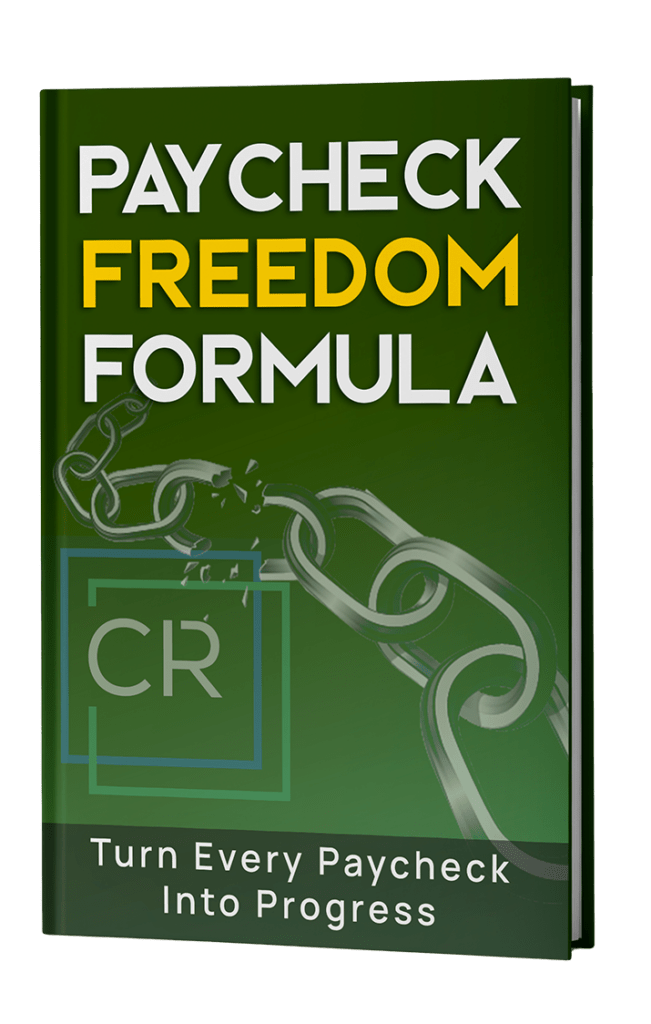
Understanding a paycheck routine is helpful. Applying it consistently is what creates change.
The Paycheck Freedom Formula is a simple, step-by-step guide designed to help this routine run automatically—without tracking every dollar or relying on willpower.
If you’re tired of wondering where the paycheck went and ready to feel steady again, this is the simplest place to start.
Download the Paycheck Freedom Formula and apply it to your very next paycheck.
Small changes, repeated consistently, are what turn income into long-term stability and wealth.
For more tips follow us on our YouTube Channel