If you’re looking for a no-annual-fee rewards card with strong cash back potential, the Freedom Flex credit card is one of the most compelling options available. Between its generous welcome bonus, rotating 5% cash back categories, built-in cell phone protection, and the ability to fit into the Chase Ultimate Rewards ecosystem, it offers impressive value for everyday spending.
However, this isn’t a card that’s perfect for everyone. To get the most out of it, you’ll need to activate bonus categories every quarter and understand how its rewards structure works.
Here’s everything you need to know before applying.
Freedom Flex Credit Card Welcome Bonus
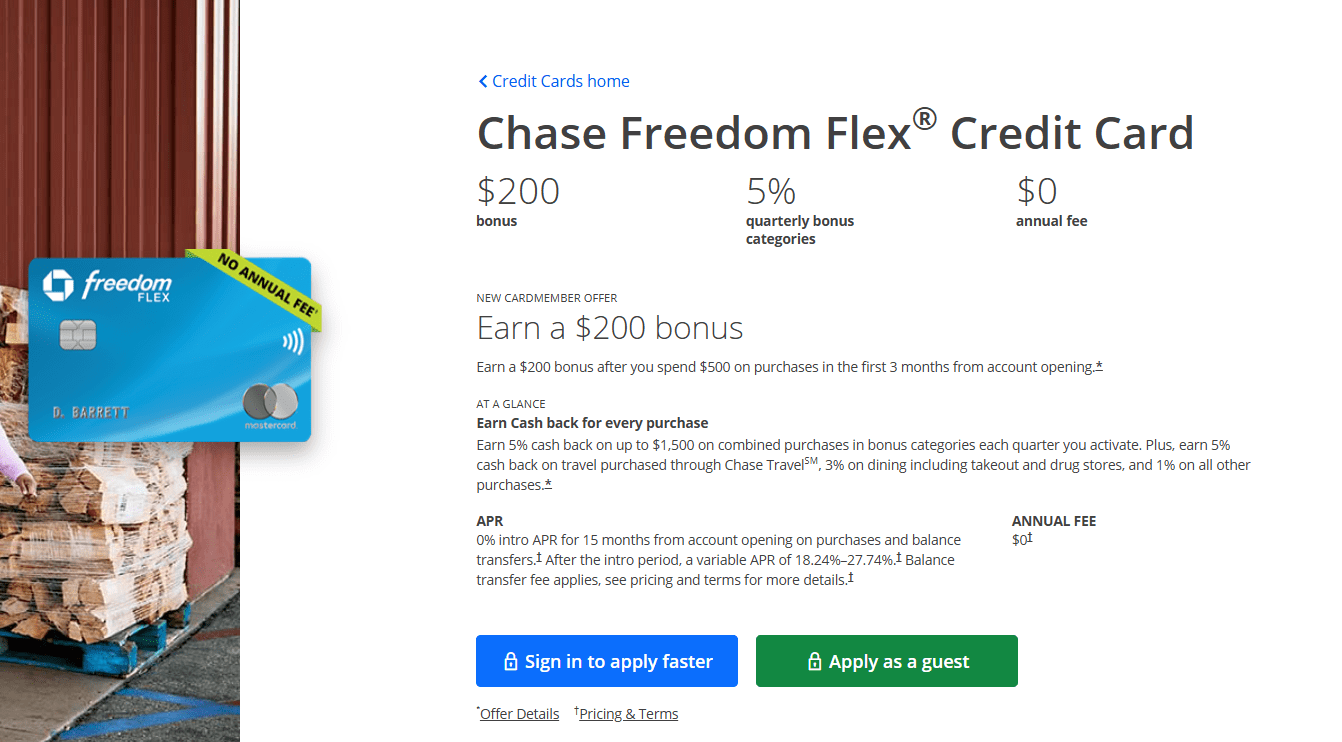
New cardholders can earn a $200 cash back welcome bonus after spending just $500 within the first three months of account opening.
Compared to many premium credit cards that require $3,000 to $6,000 in spending to unlock a bonus, this requirement is remarkably easy to meet through normal expenses like:
- Groceries
- Gas
- Utility bills
- Streaming subscriptions
To qualify for the bonus:
- You cannot currently have the Freedom Flex credit card open.
- You must not have received a new cardmember bonus for this card within the previous 24 months.
This relatively low spending requirement makes the welcome offer one of the easiest to earn among major credit cards.
How the Freedom Flex Credit Card Earns Cash Back
The Freedom Flex credit card features multiple reward rates depending on where you spend.
You’ll earn:
- 5% cash back on rotating quarterly bonus categories after activation
- 5% cash back on travel booked through Chase Travel
- 3% cash back on dining, including takeout and delivery
- 3% cash back at drugstores
- 1% cash back on all other purchases
While these bonus categories can generate impressive rewards, understanding the quarterly rotation is essential.
Understanding the 5% Rotating Categories
The rotating categories are the biggest attraction of the Freedom Flex credit card.
Every three months, Chase announces new bonus categories. Previous categories have included:
- Gas stations
- Grocery stores (excluding some retailers such as Walmart and Target)
- Amazon
- PayPal
- Restaurants
- Streaming services
- Drugstores
- Fitness clubs
- Wholesale clubs like Costco and Sam’s Club
The most important detail is that these categories must be activated each quarter.
If you forget to activate them, purchases earn only 1% cash back instead of 5%.
Quarterly Spending Cap
The 5% rate applies only to the first $1,500 in combined purchases across all rotating categories each quarter.
Once you exceed that limit:
- Remaining purchases in those bonus categories earn only 1% until the next quarter begins.
That means the maximum bonus category earnings equal:
- $75 cash back per quarter
- Up to $300 annually
For most households, a $1,500 quarterly limit is more than enough to maximize the bonus.
Cell Phone Protection: An Overlooked Benefit
One of the least-discussed advantages of the Freedom Flex credit card is its Mastercard World Elite cell phone protection.
If you pay your monthly wireless bill with the card, you’re eligible for:
- Up to $800 reimbursement per approved claim
- Two claims each year
- Annual maximum coverage of $1,000
- $50 deductible per claim
Whether your phone is accidentally damaged or stolen, this benefit can save hundreds of dollars on repair or replacement costs.
Considering how expensive modern smartphones have become, this feature alone can provide significant long-term value.
Additional Card Benefits
Besides cash back rewards, the card includes several valuable protections:
- Extended warranty coverage on eligible purchases
- Purchase protection up to $500 per claim
- Trip cancellation and interruption insurance
These benefits add extra value without requiring an annual fee.
Freedom Flex Credit Card vs. Freedom Unlimited
Many people compare the Freedom Flex credit card with the Chase Freedom Unlimited.
While both cards have no annual fee, their everyday earning structures differ.
Freedom Flex
- 5% rotating quarterly categories
- 5% Chase Travel
- 3% dining
- 3% drugstores
- 1% on all other purchases
Freedom Unlimited
- 1.5% cash back on purchases outside bonus categories
- Similar bonus rates on travel and dining
The biggest difference is the base earning rate.
If much of your spending falls outside rotating categories, Freedom Unlimited’s flat 1.5% return may generate more rewards over time.
Many experienced Chase users actually carry both cards:
- Freedom Flex for rotating categories
- Freedom Unlimited for everyday purchases
This combination helps maximize cash back throughout the year.
Building the Chase Trifecta
The Freedom Flex credit card becomes even more valuable when paired with Chase Sapphire Preferred or Chase Sapphire Reserve.
This strategy—commonly known as the Chase Trifecta—lets you:
- Combine rewards from multiple Chase cards
- Convert cash back into Ultimate Rewards points
- Transfer points to airline and hotel loyalty programs for potentially greater value
For frequent travelers, this setup can significantly increase the value of earned rewards.
Fees, APR, and Other Important Terms
The card comes with several additional features worth noting.
No Annual Fee
The Freedom Flex credit card charges no annual fee, making it inexpensive to keep long term.
Introductory APR
New cardholders receive:
- 0% introductory APR for 15 months on purchases
- 0% introductory APR for 15 months on eligible balance transfers
After the promotional period ends, the variable APR applies based on creditworthiness.
Balance transfers also include a transfer fee, so it’s important to calculate whether the savings justify the cost.
Foreign Transaction Fee
The card charges a 3% foreign transaction fee.
Because of this, it isn’t an ideal choice for international travel.
Flexible Reward Redemptions
Cash back rewards:
- Never expire while the account remains open
- Have no minimum redemption amount
Even small reward balances can be redeemed.
Chase 5/24 Rule
Applicants should also remember Chase’s well-known 5/24 rule.
If you’ve opened five or more personal credit cards across all issuers during the past 24 months, your application will likely be declined regardless of your credit score.
Who Should Get the Freedom Flex Credit Card?
This card is an excellent fit for people who:
- Don’t mind activating bonus categories four times each year
- Frequently spend in rotating bonus categories
- Pay their monthly cell phone bill with a credit card
- Already own—or plan to get—Freedom Unlimited
- Want to build a Chase Trifecta rewards strategy
- Prefer a no-annual-fee rewards card
Used correctly, it can generate some of the highest cash back available without paying an annual fee.
Who Should Skip It?
The Freedom Flex credit card isn’t ideal for everyone.
You may want to consider another option if you:
- Often forget to activate quarterly categories
- Spend heavily outside bonus categories
- Frequently travel internationally
- Regularly carry a balance and pay interest
If your spending doesn’t align with the rotating categories, a flat-rate cash back card may provide better long-term value.
Final Verdict
The Freedom Flex credit card delivers exceptional value for a no-annual-fee credit card. Its combination of a low spending requirement for the welcome bonus, rotating 5% cash back categories, strong dining rewards, and underrated cell phone protection makes it one of the most rewarding options for organized cardholders.
The only real drawbacks are the need to activate bonus categories every quarter, the 1% earning rate on non-bonus purchases, and the foreign transaction fee.
For consumers willing to manage its rotating categories—and especially those pairing it with Freedom Unlimited or a Chase Sapphire card—the Freedom Flex credit card is absolutely worth considering. It offers outstanding earning potential, valuable purchase protections, and flexibility that can continue to pay off for years.