If you’re considering the Capital One VentureOne and want to know whether it fits your spending and travel habits, there are a few important things to understand before applying. The card has no annual fee, offers a welcome bonus, earns miles on everyday purchases, and gives you access to Capital One’s airline and hotel transfer partners.
However, its 1.25 miles per dollar base earning rate is lower than some other cards. The real appeal of the Capital One VentureOne comes from how its miles can be used, especially if you know how to take advantage of transfer partners.
How to Earn the 20,000-Mile Welcome Bonus
The Capital One VentureOne offers 20,000 bonus miles after you spend $500 within the first three months of opening the account. Those miles can be worth about $200 toward travel, depending on how you redeem them.
The $500 spending requirement is relatively low compared with many credit card welcome offers. Once you meet the requirements, Capital One says the bonus miles should appear in your account within two billing cycles.
There is also an important eligibility restriction. You generally won’t qualify for the new-cardmember bonus if you have received a new-cardmember bonus for the VentureOne, Venture, or Venture X within the previous 48 months. Check your previous Capital One card history before applying.
How the Capital One VentureOne Earns Miles
The Capital One VentureOne earns 1.25 miles per dollar on every purchase, with no spending categories to keep track of.
You can also earn 5 miles per dollar on hotels, vacation rentals, rental cars, and activities booked through Capital One Travel. The card also offers 5 miles per dollar through Capital One Entertainment.
For example, if you spend $1,600 per month at the 1.25-mile rate, that works out to 24,000 miles over a year. Because the card has no annual fee, you don’t have to subtract an annual charge from those rewards.
However, the Capital One VentureOne has the lowest everyday earning rate in the Venture Miles lineup. Capital One Quicksilver offers 1.5% cash back, while the $95 Venture earns 2 miles per dollar.
That makes the way you redeem your rewards particularly important.
Why Capital One VentureOne Miles Can Be Valuable
The biggest reason to consider the Capital One VentureOne is that it is a miles card rather than a simple cash-back card.
Its miles can be transferred to more than 15 airline and hotel loyalty programs, including programs such as Air Canada, Air France, Turkish Airlines, and Wyndham. The Capital One VentureOne provides access to the same transfer-partner system available with the Venture and Venture X.
You can also generally redeem miles toward eligible travel at around 1 cent per mile. Cash redemptions may provide less value.
Transfer partners can potentially provide more value, particularly when you use miles for international or premium-cabin flights. Before transferring miles, compare the cash price of the trip with the number of miles required, including taxes and fees. Transfers generally cannot be reversed.

Turning Cash Back Into VentureOne Miles
Another feature that can make the Capital One VentureOne more interesting is its relationship with other Capital One cards.
If you also have an eligible Capital One cash-back card, such as Quicksilver or Savor, you may be able to move your cash-back rewards into your VentureOne account. At the conversion described in the transcript, $1 of cash back becomes 100 miles.
This means the Capital One VentureOne can potentially serve as a no-annual-fee hub for a broader Capital One card setup. You could earn cash back on one card and then move those rewards to VentureOne for access to transferable miles.
For someone who wants to use Capital One transfer partners without paying an annual fee, this can be an important part of the card’s appeal.
0% Introductory APR
The Capital One VentureOne also offers a 0% introductory APR period of 15 months on purchases and balance transfers, according to the terms discussed in the transcript.
This is notable because the $95 Venture and $395 Venture X do not offer the same introductory financing feature.
After the introductory period, the variable APR is stated as 18.49% to 28.49%. A balance transfer fee applies when you transfer a balance.
The card also has no annual fee and no foreign transaction fees. Miles do not expire while the account remains open.
Other benefits include complimentary Hertz Five Star status and Capital One Travel tools, including price prediction features that can help you decide when to book flights.
How Capital One VentureOne Compares to Quicksilver
Both cards have no annual fee, but they work differently.
Quicksilver earns 1.5% cash back on purchases, while the Capital One VentureOne earns 1.25 miles per dollar. If you’re simply looking for straightforward cash back and redeem your rewards at fixed values, Quicksilver can provide more value from the same spending.
VentureOne becomes more interesting if you can get more than 1.2 cents of value from each mile through travel redemptions and transfer partners.
The key difference is therefore not just the earning rate. It’s what you plan to do with the rewards after you earn them.
How Capital One VentureOne Compares to Venture
The regular Venture card has a $95 annual fee and earns 2 miles per dollar on everyday purchases. It also has access to the same transfer partners as the VentureOne.
At a value of 1 cent per mile, the additional 0.75 miles per dollar earned by Venture would require roughly $12,700 in annual spending for the extra rewards to offset the $95 annual fee. That calculation only considers ongoing everyday rewards and doesn’t account for Venture’s larger welcome offer or additional benefits.
For someone spending below that level, VentureOne avoids the annual fee. For someone spending more, the additional rewards from Venture become more significant.
Who Is the Capital One VentureOne For?
The Capital One VentureOne is designed for someone who wants access to Capital One’s transfer-partner system without paying an annual fee.
It may also make sense as a companion card if you already use other Capital One cards that earn cash back and want to convert those rewards into miles.
The 15-month introductory APR period can be another reason someone might consider it, particularly if they have a planned purchase or balance transfer that fits within the promotional terms.
On the other hand, someone who primarily wants simple cash back may prefer a card with a higher fixed cash-back rate. Someone who spends heavily and travels frequently may also want to compare the VentureOne with Capital One’s annual-fee Venture cards.
If you don’t plan to transfer miles or use them for travel, the VentureOne’s 1.25-mile-per-dollar earning rate may be less compelling because you aren’t taking advantage of the feature that differentiates it from a straightforward cash-back card.
Check Your Eligibility Before Applying
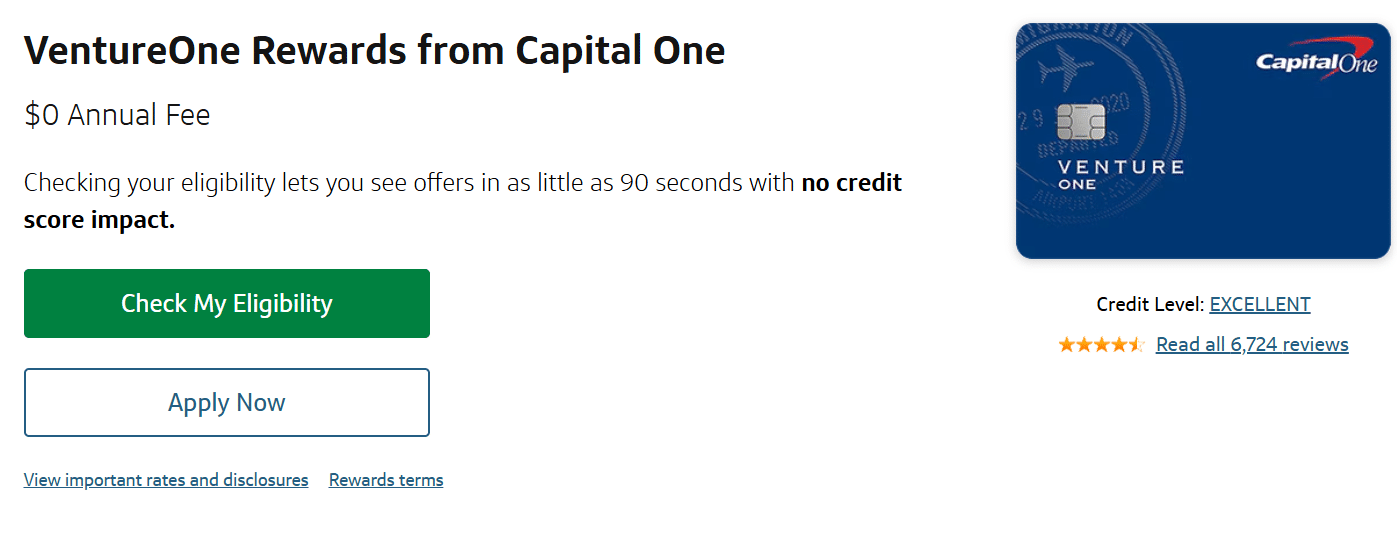
Applying for a credit card generally results in a hard inquiry on your credit report. The Capital One VentureOne is designed for applicants with excellent credit.
Capital One also provides an eligibility check that can help you see whether you’re likely to qualify before submitting a full application. According to the transcript, this check can be completed without affecting your credit score.
Capital One does not publish a fixed rule for how frequently you can apply for its cards. However, recent applications, new accounts, and hard inquiries can all be factors that affect your application.
For that reason, it’s worth checking your eligibility and reviewing your recent credit activity before applying.
Final Thoughts on Capital One VentureOne
The Capital One VentureOne has a relatively specific role in the Capital One lineup. Its 1.25 miles per dollar everyday earning rate is lower than the earning rates offered by some competing Capital One cards, but it comes with no annual fee and access to Capital One’s transfer partners.
Its 20,000-mile welcome bonus, 15-month introductory APR period, no foreign transaction fees, and ability to work alongside other Capital One cards add to its overall flexibility.
For someone who wants a no-annual-fee way into transferable Capital One miles, the card offers a straightforward option. The main question before applying is whether you will actually use the travel and transfer features that make the card different from a basic cash-back card.